Vision → Detail → Prompt
To build software requires product vision, attention to the details and excellent prompts. Don't waste time on traditional coding.
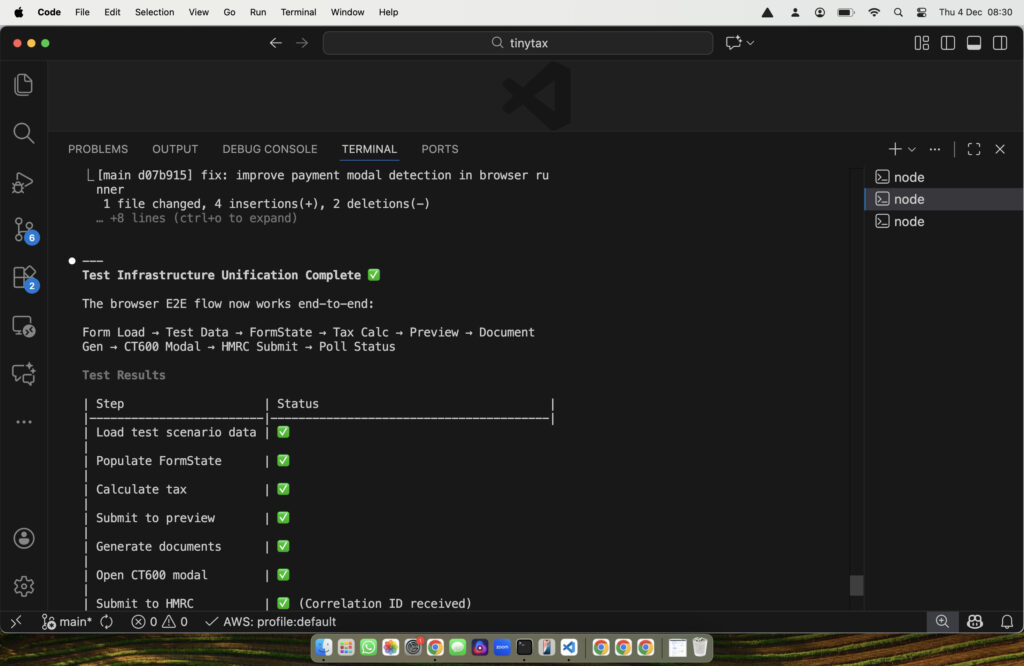
My Tiny Coders are Claude and Codex — two AI-powered software engineering agents from Anthropic and OpenAI. They’re the ones who built TinyTax. Literally.
Back in 2008, when I started Clear Books, I was the only developer for the first three years. We were bootstrapped, and every line of code came from me.
At Countingup in 2017, I raised £500k pre-seed to hire a team to build the initial product. I shaped the accounting architecture and product UX, but I didn’t write the code — aside from one growth hack that accidentally became our biggest acquisition channel.
TinyTax in 2025 is something entirely different.
- I haven’t hired a team.
- I haven’t written a single line of code.
- No human engineer has touched the product.
And yet, TinyTax exists — because two AI agents built it.
It’s genuinely astonishing to watch. They not only write the code; they improve every week. The speed, the reliability, the ability to understand product intent — it’s like having two senior engineers who never sleep and get better every release.
So what have I actually done?
I’ve paid £150/month for Claude and £60/month for Codex. Claude writes the code. Codex reviews it. I supervise the architecture, the product vision, and the details — every interaction, every screen, every edge case. And then I translate that vision into clear, human-readable prompts.
That’s the real skill now: Vision → Detail → Prompt.
If you know precisely what you want to build, and you can describe it clearly in english, you can build a tech company. No engineering team. No fundraising. No long lead times. Just ideas turned into products through language.
Now anyone with product intuition, imagination, and the ability to express it clearly can create software. The barriers have collapsed. The world of coding has been opened up to everyone.
As we approach 2026, if there’s a business idea sitting in the back of your mind, there’s never been a better time to start a tech company. And if you’re not sure where to start, just ask the AI.